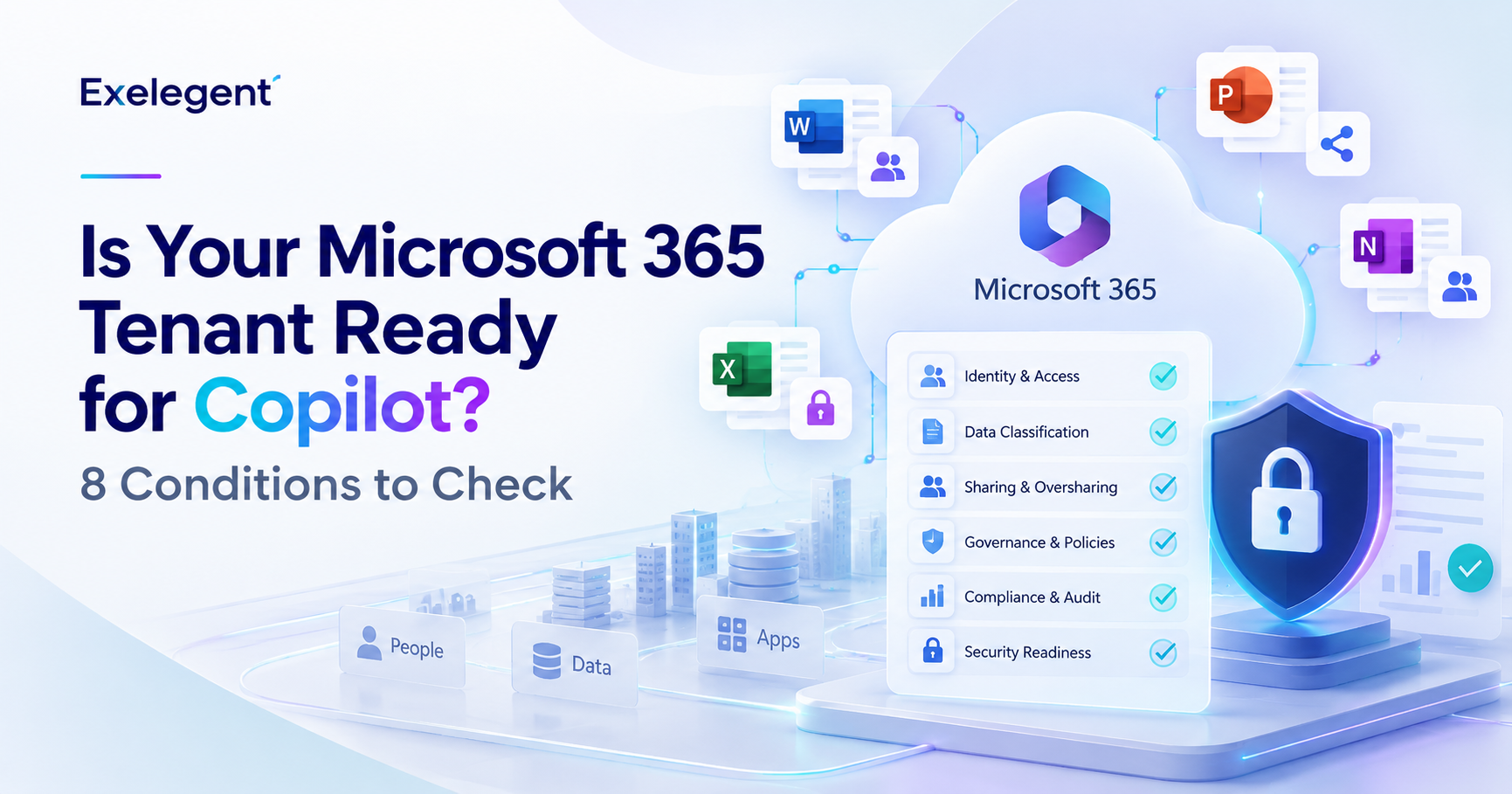
Small and mid-sized enterprises are entering a new era of digital operations in which Modern Work 2026 shapes how organisations use cloud tools, data and AI.
Microsoft 365 has become the foundation for communication, collaboration, productivity and security.
The platform empowers flexibility and innovation, but it also introduces complexity that can increase costs, reduce efficiency and create security blind spots.
Executives in SMEs often assume Microsoft 365 runs itself. In reality, without structured governance, regular optimisation and clear persona-based planning, most organisations overspend significantly while underusing high-value features.
This guide explains how SMEs can extract full value from Microsoft 365, strengthen security, reduce licensing waste and prepare the business for Copilot and future AI capabilities.
The approach is consultative, practical and fully aligned to the expectations of Modern Work 2026, giving leaders clarity rather than technical deep dives.
1. Modern Work 2026 with Microsoft 365 Has Become More Complex for SMEs
When Microsoft 365 was first adopted, SMEs viewed it as a simple productivity suite. Over time, it evolved into a full ecosystem that spans communication tools, identity management, data governance, security features, automation engines and AI capabilities. This evolution reflects the broader shift toward Modern Work 2026, where the digital workplace is unified, secure and AI-prepared.
This expansion created new challenges:
- Licensing became harder to navigate.
- Security configurations became critical to avoid breaches.
- Provisioning and deprovisioning began consuming time.
- Costs increased due to duplicated tools and unused services.
- AI introduced new risks around data exposure and permission hygiene.
SMEs often lack the large IT teams needed to address these complexities. Many organisations lack visibility into licence utilisation, identity behaviour, security posture and data exposure.
The good news is that with the right optimisation strategy, Microsoft 365 can deliver substantial value and immediate cost savings. SMEs simply need guidance, structure and a clear roadmap to operate efficiently within Modern Work 2026.
2. The Hidden Costs of Microsoft 365 in SMEs
Most SMEs overspend in Microsoft 365 without realising it. This happens due to operational gaps and lack of governance visibility—two issues that become even more impactful in Modern Work 2026.
Common cost-inflating factors include:
- Assigning users to E3 or E5 licences when they do not need all features.
- Leaving licenses assigned to inactive mailboxes or former employees.
- Paying for external tools that duplicate Microsoft 365 capabilities.
- Mismatched licences as employees change roles.
- CSP programme changes introducing pricing volatility.
- Security features included in E5 that remain disabled due to lack of expertise.
- Manual provisioning and deprovisioning processes that lead to errors and waste.
Identifying these hidden cost drivers is the starting point for a high-impact optimisation programme aligned to Modern Work 2026.
3. The SME Opportunity: Modern Work With Lower Cost and Higher Security
When Microsoft 365 is properly optimised, SMEs gain a significant competitive advantage—one that mirrors the operational maturity expected in Modern Work 2026.
With optimisation:
- Modern Work becomes more efficient.
- Security posture strengthens dramatically.
- Operational clarity increases.
- Costs drop by eliminating waste.
- The organisation becomes fully prepared for Copilot and other AI tools.
Optimisation is not about cutting licences blindly. It is about aligning technology with business needs through visibility, governance and structured planning. SMEs that adopt this approach see reductions in licensing spend, improved productivity, stronger security controls, reduced shadow IT, faster onboarding and offboarding, stronger data protection and readiness for AI-driven workflows.
4. The Exelegent Framework for Microsoft 365 Optimisation
SMEs rarely have the time or expertise to run detailed licence analysis or security audits. Modern Work 2026 requires a structured and repeatable framework—and that is exactly what the Exelegent M365 Optimisation Framework delivers.
The framework includes six stages:
- Visibility
- Governance
- Persona Mapping
- Optimisation
- Security Alignment
- AI Preparation
Each stage helps SMEs reduce costs, improve security and increase productivity in a measurable and sustainable way.
5. Stage One. Visibility: Understanding the Environment
Visibility is the foundation of every optimisation effort and an essential requirement for Modern Work 2026. Most SMEs lack clarity on their actual Microsoft 365 utilisation.
This stage collects insights such as:
- Licensing inventory
- User activity patterns
- Workloads utilised within M365
- Inactive accounts and mailbox usage
- Duplicated tools
- Security and compliance configurations
- Storage patterns across OneDrive, SharePoint and Teams
- Identity behaviours
When SMEs see real utilisation data, they often discover major optimisation opportunities. Many E3 or E5 users do not use key features such as eDiscovery, Defender or Information Protection—creating immediate ROI potential.
6. Stage Two. Governance: Creating Structure and Control
Without governance, Microsoft 365 becomes chaotic. In Modern Work 2026, governance is no longer optional.
Common issues include:
- Unmonitored privilege accumulation
- Uncontrolled app installation
- Data sprawl across Teams and SharePoint
- Inconsistent provisioning processes
Governance introduces structure and policy. Key components include licence assignment rules, standardised provisioning workflows, consistent deprovisioning, security policies, retention policies and conditional access.
Even lightweight governance transforms the environment, reduces cost leakage, improves security and prepares the organisation for AI.
7. Stage Three. Persona Mapping: Assigning the Right Profiles
Persona mapping is an essential practice for companies preparing for Modern Work 2026. It allows SMEs to match employee roles with the correct licence type and security requirements.
Personas typically include:
- Frontline workers
- Administrative roles
- Management
- Technical and engineering roles
- Executives
Each persona receives a dedicated licence profile and security baseline. This eliminates waste from generic E3 or E5 allocations and ensures users have exactly what they need.
8. Stage Four. Optimisation: Reducing Cost and Increasing Efficiency
Once visibility and personas are established, SMEs can execute targeted optimisation that aligns with Modern Work 2026 expectations.
Typical outcomes include:
- Removing unused licences
- Reallocating over-provisioned accounts
- Rightsizing plans
- Eliminating duplicate tools
- Negotiating CSP pricing
- Aligning subscriptions with the correct billing terms
- Reducing or removing unnecessary add-ons
Optimisation enhances operational clarity, reduces manual workload and ensures licensing spend matches real business needs.
9. Stage Five. Security Alignment: Strengthening the Foundation
Security is deeply tied to licensing in Microsoft 365. Preparing for Modern Work 2026 requires activating and configuring security tools organisations already own.
Key components include:
- Multifactor Authentication
- Conditional Access
- Defender for Office, Identity and Endpoint
- Secure Score optimisation
- Purview sensitivity labels and retention policies
SMEs are prime targets for cyberattacks. Aligning security with licensing reduces risk, unlocks E5 value and lays the foundation for safe AI adoption.
10. Stage Six. AI Preparation: Making the Organisation Ready for Copilot
AI sits at the centre of Modern Work 2026. Microsoft 365 Copilot delivers transformative capabilities, but it introduces responsibilities around governance, data exposure and identity security.
AI preparation includes:
- Reviewing access permissions
- Classifying and protecting sensitive data
- Applying Purview labels
- Implementing governance controls
- Monitoring AI activity
- Enforcing conditional access for Copilot usage
Once these elements are in place, Copilot becomes safe, powerful and value-generating. SMEs that prepare early gain a competitive advantage.
11. How Exelegent Helps SMEs Accelerate Microsoft 365 Optimisation
Exelegent provides a structured approach built around transparency, cost efficiency, operational excellence, enhanced security posture and AI governance.
Using TrustElements, Exelegent delivers visibility across licensing, identity, security and utilisation—creating a single source of truth for executives.
With support from Exelegent, SMEs can:
- Reduce licensing waste
- Eliminate duplicate tools
- Strengthen security
- Maximise ROI on E3 and E5
- Prepare for Copilot
- Align M365 with business strategy
This guided model is perfectly aligned to the maturity expected in Modern Work 2026.
12. The SME Case Study Blueprint
Patterns of optimisation across SMEs typically include:
- Manufacturing: 30% of E3 licences assigned to inactive accounts; optimisation reduced costs and activated security features.
- Healthcare: E5 licences purchased for compliance but Purview never configured; governance and eDiscovery reduced risk.
- Growing SME: Inconsistent provisioning; implementing JML workflows improved both cost control and speed.
- AI adoption: Copilot pilots without data governance; after readiness planning, access was secured and adoption became safe.
These examples demonstrate that SME challenges are predictable and solvable with a structured Modern Work 2026 framework.
13. The Executive Checklist for Microsoft 365 Optimisation
Leaders should ask:
- Do we have visibility into licence utilisation?
- Do users have the correct personas?
- Is provisioning consistent?
- Are we paying for duplicate tools?
- Are security features fully enabled?
- Are we ready for Copilot?
- Do we monitor access to sensitive data?
- Do we review licence usage regularly?
- Do we have structured governance?
- Do we understand underutilised E3/E5 features?
The more affirmative answers, the closer the organisation is to the Modern Work 2026 standard.
14. The Path Forward for SMEs
Microsoft 365 optimisation is no longer optional. Costs are rising, cyber threats are increasing and AI capabilities require governance.
SMEs that act now will:
- Reduce unnecessary expenses
- Improve security
- Accelerate productivity
- Prepare for Copilot and AI
SMEs that delay will face higher costs, fragmented governance, inefficient operations and increased security exposure.
Working with the right strategic partner helps organisations move from complexity to clarity and from cost to value.
This is the core of Modern Work 2026—a secure, efficient, AI-ready digital workplace.