Decision → engagement → funding. Eligibility should be confirmed, not assumed.
Choose your situation
What are you trying to solve?
Go directly to the scenario that best matches the decision in front of your team.
Microsoft funded engagements rarely enter the conversation at the beginning of a technology decision. The conversation usually starts somewhere else.
Everyone recognizes the need. Nobody agrees on whether the organization is ready, which evidence is missing, or where the budget should come from.
That is where otherwise defensible technology decisions become delayed, fragmented, or approved without enough evidence. A security initiative gets reduced to a product comparison. A licensing decision is treated as a spreadsheet exercise. An Azure commitment is approved using a workload pattern that no longer exists. A Copilot rollout receives an executive date before governance prerequisites have been established.
Microsoft maintains incentive and investment programs that may support eligible customer engagements across assessment, envisioning, proof of concept, deployment, adoption, measurable usage, and competitive migration. Microsoft organizes these engagement opportunities by solution area and documents customer qualification, partner qualification, Proof of Execution requirements, resources, and rates for each engagement.
But funding should not be the first question. The first question should be: what decision does the organization need to make, and what evidence is missing?
A decision first approach creates discipline before funding is introduced. It defines the business outcome, clarifies the risk of waiting, identifies the required evidence, and establishes whether an assessment, proof of concept, deployment, adoption initiative, or migration would genuinely help. Only then should the organization evaluate whether Microsoft funding may reduce some of the financial or operational friction involved.
The goal is not to obtain an incentive. The goal is to make a better technology decision with less financial and operational friction.
What Are Microsoft Funded Engagements?
A Microsoft funded engagement is a structured customer initiative delivered under an eligible Microsoft investment or incentive opportunity. Depending on the engagement, it may support envisioning, assessment, proof of concept, deployment, adoption, measurable usage growth, migration, or competitive replacement.
Microsoft Commerce Incentives, or MCI, is the partner incentive framework through which defined earning opportunities are organized across Microsoft solution areas. Each engagement has its own partner role, customer qualification criteria, partner qualification criteria, expected scope, Proof of Execution, resource links, rates, and status. Funding is therefore neither a coupon nor an entitlement.
The customer should not be expected to understand internal program labels before seeking help. The more useful starting point is a business question. Are we ready for Copilot? Are we realizing enough value from E5? Are licensed security capabilities operating as intended? Can we replace a competitor without adding migration risk? Are Azure commitments aligned to the workloads that will consume them?
Once the decision has been defined, an eligible partner can evaluate whether an active Microsoft funded engagement may support the required work. Availability remains subject to customer, partner, workload, timing, licensing, program status, approval, execution, and evidence requirements.
Why Microsoft Funds Customer Assessments and Deployments
Microsoft funded engagements exist to support defined customer outcomes across Microsoft solution areas. Some are designed to help customers understand an opportunity before committing. Others support an eligible deployment, adoption milestone, usage outcome, migration, or competitive replacement after a qualifying transaction.
That distinction matters in the boardroom. The CFO may hear the word funding and assume it is a discount. The CIO may assume the program can fund any Microsoft project. The CISO may worry that a funded workshop is a product demonstration with a predetermined recommendation. None of those assumptions is a safe operating model.
A credible engagement should have a documented objective, a defined scope, customer participation requirements, expected outputs, and evidence requirements. Microsoft may compensate the eligible partner after execution and Proof of Execution validation. In other cases, customer support may involve a different investment mechanism. The exact structure must be validated for the specific program.
The customer value is not the program itself. The value is the opportunity to answer a material question with evidence: which capabilities should be deployed, which risks should be addressed, which users should be included, which workloads should migrate, what success should look like, and what leadership should decide next.
Start With the Decision, Not the Program
“We want to do more with AI” is an ambition. “We need to determine whether Copilot can be deployed without amplifying overshared access” is a decision.
“We need better security” is an ambition. “We need to evaluate whether Defender and Purview can replace overlapping tools without increasing operational risk” is a decision.
“Azure is expensive” is a symptom. “We need to determine which workloads are stable enough for reservations and which require the flexibility of savings plans” is a decision.
The decision first model separates the business case from the funding mechanism. Leadership first establishes the outcome, risk, evidence, scope, owners, and timing. The engagement category is considered second. Microsoft funding is considered third, after the requirement is clear enough to evaluate against current eligibility rules.
This order relieves tension between the CIO, CFO, and CISO. The CIO can describe the operating objective. The CFO can evaluate financial exposure and timing. The CISO can define required controls and evidence. Nobody has to approve a product or promise funding before the decision criteria are understood.
The decision first sequence
- Define the business decision.
- Identify the financial, operational, security, or compliance risk of delaying it.
- Document the evidence leadership needs.
- Define the users, workloads, systems, and timeline in scope.
- Map the need to an assessment, proof of concept, deployment, adoption, or migration path.
- Validate current customer and partner eligibility.
- Execute the approved engagement and document the required evidence.
The Executive Decision Guide
| Customer symptom | Real business decision | Potential eligible engagement path | Final deliverable and evidence |
|---|---|---|---|
| Leadership wants Copilot, but security is concerned about permissions and oversharing.Explore Copilot scenario → | Can Copilot be introduced without amplifying existing access, governance, and data protection weaknesses? | Copilot readiness, secure data foundation, envisioning, controlled proof of concept, or deployment support, subject to eligibility. | Readiness findings, high risk access areas, governance gaps, use cases, guardrails, rollout criteria, and measurement plan. |
| Microsoft 365 costs increased, and value across E3, E5, or Business Premium is unclear.Explore Microsoft 365 scenario → | Which users need which capabilities, and what should be retained, reassigned, adopted, expanded, or challenged before renewal? | Microsoft 365 value realization, AI ready productivity, deployment, adoption, or renewal readiness, subject to eligibility. | License to user mapping, adoption evidence, underused capabilities, security dependencies, renewal matrix, and actions. |
| Defender, Purview, or Sentinel is licensed, but operational protection is unclear.Explore security scenario → | Are the licensed controls deployed, configured, adopted, and producing measurable security outcomes? | Security envisioning, Defender or Purview deployment, security usage, Sentinel modernization, or value review, subject to eligibility. | Current state findings, configuration gaps, coverage evidence, dependencies, and prioritized roadmap. |
| The organization is considering replacing CrowdStrike, Proofpoint, Splunk, AWS, Google Cloud, or another platform.Explore replacement scenario → | Can the platform be replaced without unacceptable continuity, migration, coverage, or governance risk? | Competitive replacement assessment, migration planning, deployment support, or conversion related engagement, subject to requirements. | Business case, target architecture, migration dependencies, transition plan, replacement evidence, and success criteria. |
| Azure costs are increasing, and commitments do not match workload behavior.Explore Azure scenario → | What mix of architecture, governance, consumption management, reservations, and savings plans fits actual workloads? | Azure assessment, migration and modernization planning, data or AI evaluation, or cost and commitment review, subject to eligibility. | Consumption baseline, workload segmentation, commitment analysis, ownership model, options, and actions. |
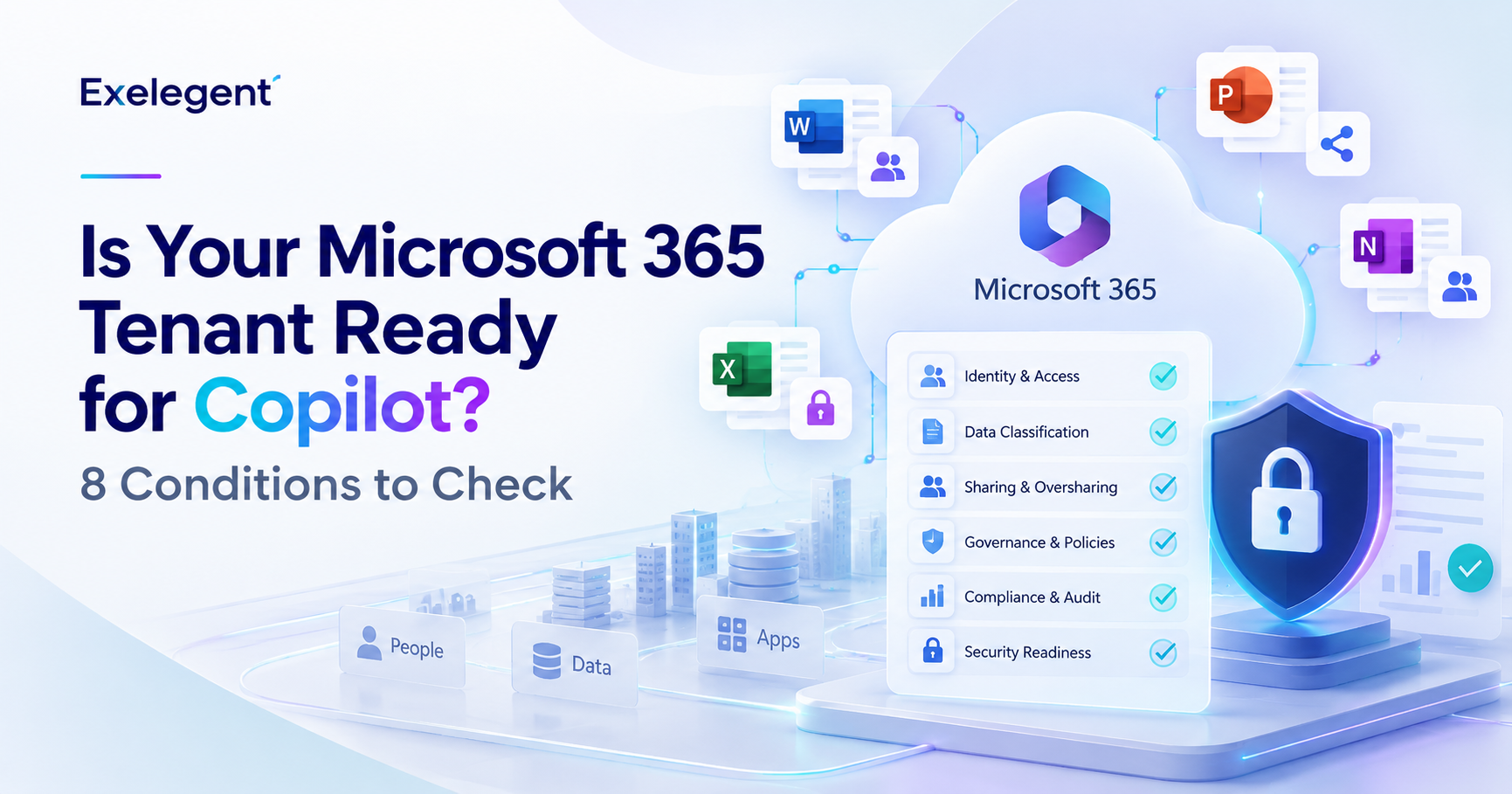
Scenario 1: We Want Copilot, but Is Our Data Ready?
The request often begins at the top. A CEO has seen Microsoft 365 Copilot demonstrated. Business leaders already have ideas for summarizing meetings, producing proposals, searching policies, and accelerating routine knowledge work. The CIO is asked to provide a deployment date.
At the next leadership meeting, the CISO changes the conversation. Before we decide when to deploy Copilot, do we know what information each user can already access? The CFO follows with a different question. How will we know whether the licenses create value? Suddenly the project is no longer an AI purchase. It is a governance, security, adoption, and measurement decision.
Microsoft explains that Copilot grounds responses in data users already have permission to access. Its secure deployment guidance recommends remediating oversharing, establishing guardrails, and addressing regulatory obligations. Existing permission problems may become easier to discover and act upon when AI can retrieve and summarize information across contexts.
The risk of delay is not neutral. Business teams may adopt alternative AI tools outside governance. Leadership expectations may rise without a value model. Licenses may be assigned before use cases, controls, baselines, and adoption ownership are defined. At renewal, the organization may be unable to distinguish a capability problem from a rollout problem.
A decision first approach asks five questions before discussing funding. Which use cases matter? What can intended users access? Which sharing and permission risks need attention? What guardrails are required? How will value be measured? Once those questions are defined, a Microsoft funded engagement may support envisioning, a controlled proof of concept, secure data foundation work, deployment assistance, or an agent scenario, subject to current eligibility.
Scenario 2: We Are Paying More for Microsoft 365. Are We Getting More Value?
The renewal spreadsheet reaches the CFO first. The total is higher than last year. Finance asks whether every assigned E3 and E5 license is necessary. The CIO cannot answer with a utilization report alone, because some capabilities protect identities, devices, data, or compliance processes without appearing as daily end user activity.
The CISO adds the question that prevents a simplistic downgrade. If we lower the license, which security and compliance dependencies disappear with it? The meeting shifts from price to value, risk, and role fit.
Microsoft published commercial pricing updates effective July 1, 2026. In US list pricing, Microsoft 365 E3 moved from $36 to $39 per user per month and Microsoft 365 E5 from $57 to $60. Existing customers see applicable pricing at renewal. That creates pressure to justify spend, but cost pressure should not produce uncontrolled license reduction.
The financial risk of inaction is continued spending without evidence of value. The operational risk of moving too quickly is false economy. The license line falls while third party products, manual controls, productivity gaps, compliance exposure, or support load rise elsewhere.
A decision first review segments users, documents operational dependencies, tests which capabilities are purchased, deployed, adopted, measured, and realized, and identifies overlap. Only then should the organization evaluate whether a Microsoft funded engagement may support value realization, deployment, adoption, renewal readiness, or competitive conversion, subject to eligibility.
Scenario 3: We Own Security Capabilities. Are They Operationally Protecting Us?
The CISO begins the board update with a statement that changes the tone. We have the licenses. That does not mean we have the protection.
The CFO sees a substantial Microsoft security investment. The CIO sees projects completed. The CISO sees a gap between entitlement, configuration, adoption, monitoring, response, and measurable risk reduction.
Defender may be licensed but not protecting every intended user or workload. Purview may be available but not consistently applied to classification, data loss prevention, retention, or insider risk scenarios. Sentinel may receive data without a shared view of required data sources, analytics, automation, ownership, and consumption.
The financial risk is duplicated spend. The organization may renew overlapping point products because Microsoft capabilities were never fully deployed or validated. The operational risk is fragmented investigation and delayed response. The governance risk is that leadership assumes a control is operating because it appears in the agreement.
A decision first security review defines the risks to reduce, the users and workloads in scope, the controls licensed, the controls operating, the evidence of coverage, and the gaps requiring remediation or new investment. This produces a defensible security decision rather than a product recommendation.
Potential Microsoft funded engagements may include security envisioning, Defender or Purview deployment, Microsoft 365 security deployment, Sentinel modernization, measurable usage growth, or competitive conversion. Each path remains subject to customer, partner, workload, execution, evidence, and approval requirements.
Scenario 4: We Are Considering Replacing a Competitor
The first comparison looks simple. Defender versus CrowdStrike, Sentinel versus Splunk, Microsoft 365 versus Google Workspace, or Azure databases versus alternatives. The CFO asks for a cost comparison. The CISO asks about coverage. The CIO asks about the migration timeline.
Then hidden work appears. Detection logic must move. Integrations must be rebuilt. Users and devices must be onboarded. Data retention, operational ownership, reporting, training, contract dates, coexistence, and exit planning must be coordinated. The decision is no longer which platform costs less. It is whether the organization can replace the incumbent without creating a gap or moving cost elsewhere.
The first financial risk is permanent coexistence. The Microsoft capability is purchased, but the incumbent is never retired. The second risk is premature replacement. The old platform is removed before controls, data flows, ownership, and procedures are ready.
A decision first replacement plan documents the current functionality, dependencies, integrations, required coverage, contract timing, target operating model, exit criteria, and evidence of successful replacement. It also identifies which costs should disappear and which consumption or operating costs may emerge.
Certain competitive replacement scenarios may qualify for Microsoft supported deployment or conversion opportunities. These may require evidence that an eligible competitor was active, documentation of migration, customer attestation, completed deployment, or proof that the Microsoft workload replaced rather than merely coexisted with the previous solution.
Scenario 5: Azure Costs Keep Growing. What Should We Review?
The CFO opens the meeting with an Azure cost chart that has moved upward for six consecutive months. The CIO explains that the business launched new projects. Infrastructure points to usage growth. Application teams warn that reducing capacity may affect performance. Nobody can identify one dramatic mistake, because cloud cost usually accumulates through hundreds of reasonable decisions.
An oversized resource was never revisited. A test environment stayed online. A database survived after a project changed direction. Reservations reflect last year’s behavior. Resources lack accountable owners. Logs and data are retained without a financial policy. Each decision is defensible alone. Together they create an unpredictable bill.
The financial risk of delay is continuing variance and weaker forecasting. The operational risk of indiscriminate cost cutting is performance degradation, lost resilience, unmet security requirements, or capacity constraints.
Microsoft states that starting February 1, 2027, reservations purchased after that date will not be eligible for exchange when the corresponding service is supported by savings plans. Reservations purchased earlier retain one final exchange. This raises the governance value of matching commitment type to actual workload behavior.
A decision first review establishes stable versus dynamic workloads, ownership, idle resources, sizing, architectural drivers, commitment fit, modernization options, and decision cadence. A Microsoft funded engagement may support an assessment, proof of value, migration, modernization, data or AI platform initiative, or other workload specific work, subject to current eligibility.
How Microsoft Funding Eligibility Actually Works
Eligibility is not determined by a single company size question. Microsoft separates customer qualification from partner qualification and documents the engagement scope, Proof of Execution requirements, rates, and resources. The Partner Center engagement view displays opportunities based on partner account and eligible location status.
A customer eligibility review may examine organization segment, geography, Microsoft agreement, current product and workload, assigned or incremental licenses, active usage, renewal or purchase timing, objective, scope, previous engagement history, competitor being replaced, customer consent, technical environment, and expected usage or consumption outcome.
Partner side validation may include enrolled location, solution designation, specialization, program status, payee profile, performance requirements, or engagement specific conditions. This is why a salesperson should not say your company qualifies before validation.
A higher trust statement is this. Your scenario appears relevant to an existing engagement category. We need to validate current customer, partner, workload, timing, and program requirements before confirming availability.
That protects the customer from making a project decision based on unapproved funding, and it protects the partner from committing to a scope that cannot be nominated, executed, evidenced, or claimed under current terms.
What a Useful Engagement Should Produce
A credible engagement should produce decision evidence, not merely activity. The exact outputs vary by pathway, but leadership should expect a documented current state, defined gaps, assumptions tested, risks identified, owners named, and recommended next actions.
For an assessment, the evidence may be a readiness baseline, prioritized findings, financial model, operational dependency map, or executive decision brief. For a proof of concept, it may include agreed success criteria, results, limitations, governance observations, and scale requirements. For deployment or adoption work, it may include completed milestones, usage evidence, configuration records, customer attestation, or other required Proof of Execution.
The customer should know what will be delivered before the work begins. Any later purchase, migration, expansion, or services decision should be based on findings and business case rather than treated as a predetermined outcome.
The Role of Exelegent
Microsoft documentation must speak in precise program terms: solution areas, eligible locations, customer qualification, partner qualification, Proof of Execution, rates, claims, workloads, and performance conditions. Leadership teams speak in decisions. Should we deploy Copilot? Are we realizing enough value from E5? Can we consolidate security tools? Is our Azure commitment appropriate? Can we replace a competitor without increasing risk?
Exelegent sits between those conversations.
The first responsibility is translation. Exelegent maps the business priority to a possible technical or advisory pathway without requiring the customer to master internal program nomenclature.
The second responsibility is validation. Exelegent reviews relevant customer, partner, workload, timing, program, dependency, and Proof of Execution requirements before positioning an engagement as available.
The third responsibility is execution. If a pathway is confirmed and approved, the engagement should deliver defined findings, evidence, recommendations, owners, and decision criteria.
The fourth responsibility is decision support. Funding may help initiate or accelerate the work, but findings should guide the next decision. The customer may proceed, reduce scope, remediate prerequisites, delay, or retain the current approach. A credible partner should not treat purchase as predetermined.
Microsoft speaks in programs. Your leadership team speaks in decisions. Exelegent translates the business priority, validates whether a relevant pathway may apply, executes the agreed work, and converts findings into practical next actions.
Frequently Asked Questions About Microsoft Funded Engagements
What is a Microsoft funded engagement?
A Microsoft funded engagement is a structured customer initiative delivered under an eligible Microsoft investment or incentive opportunity. It may support assessment, envisioning, proof of concept, deployment, adoption, measurable usage, or migration. Each engagement has defined customer and partner qualification requirements, scope expectations, Proof of Execution, rates, and approval conditions. Funding and availability must be confirmed for the specific customer and engagement.
Why does Microsoft fund customer assessments and deployments?
Microsoft uses incentive and investment programs to support eligible customer outcomes across its solution areas. Depending on the program, this may include evaluating an opportunity, deploying an eligible workload, improving adoption, increasing measurable usage, or completing a migration. Funding is tied to defined objectives and evidence requirements. It is not unrestricted budget for unrelated services.
Is Microsoft funding guaranteed?
No. Microsoft funding is not guaranteed. Availability may depend on customer qualification, partner qualification, workload, geography, licensing, timing, previous engagement history, portal status, approved scope, execution, and required evidence. A relevant business scenario may justify an eligibility review, but funding should not be represented as approved until the applicable criteria and Microsoft process have been completed.
Does every organization qualify for MCI funding?
No. Eligibility differs by engagement and may depend on customer segment, seat count, licensing, usage, purchase or renewal timing, geography, workload, competitor displacement, and prior engagement history. Partner eligibility also matters. An organization should validate current requirements for the specific scenario rather than assume that company size or Microsoft spending alone determines qualification.
What information is needed for an eligibility review?
An eligibility review typically starts with the business priority, Microsoft environment, products and workloads in scope, user or seat profile, current licensing, usage, renewal or purchase timeline, desired outcome, and relevant competitive platforms. Additional information may be required by the engagement. Exelegent uses this context to map the need to current customer, partner, workload, and program requirements.
Can Microsoft funded engagements be combined?
Some engagements may have dependencies, related deployment paths, conversion components, shared caps, or stacking rules. Others may not be combined for the same customer, tenant, workload, or time period. The combination should be reviewed against current program terms before a plan is presented. Technically related projects do not automatically qualify for multiple funding paths.
Can Microsoft funding support Copilot readiness?
Potential Copilot related opportunities may support envisioning, proof of concept, deployment, adoption, agent scenarios, or secure data foundation work, subject to current eligibility. The first step should be to define use cases, governance needs, permission risks, required guardrails, and success measures. Availability must then be validated for the customer, partner, workload, timing, and specific engagement.
Can Microsoft funding support Defender, Purview, or Sentinel projects?
Potential Microsoft supported security engagements may address envisioning, deployment, usage, data security, threat protection, SIEM modernization, or competitive replacement. The applicable path depends on current licensing, customer profile, existing usage, intended outcome, partner qualifications, consumption where relevant, and Proof of Execution requirements. The engagement should begin with a defined security decision rather than a generalized request for funding.
Can Microsoft funding help with competitive migrations?
Certain competitive replacement scenarios may qualify for Microsoft supported deployment or conversion opportunities. Qualification may require evidence that an eligible competitor was actively used, migration documentation, customer attestation, completed deployment, and proof that the Microsoft workload replaced rather than merely coexisted with the previous solution. Requirements vary by workload and must be confirmed before commitment.
How does Exelegent validate Microsoft funding eligibility?
Exelegent begins with the customer’s business priority, environment, scope, licensing, timing, and desired outcome. Exelegent then maps the scenario to current engagement criteria, validates relevant customer and partner conditions, checks dependencies and stacking considerations, and determines whether a nomination or approval path may be available. No funding commitment should be made until the applicable requirements have been verified.
What happens after a funded assessment?
The next step should depend on the findings. A completed engagement may produce a current state analysis, proof of concept results, deployment evidence, adoption data, decision criteria, risks, and prioritized actions. The customer may proceed, change scope, address prerequisites, delay the initiative, or retain the current approach. Funding should support an informed decision, not predetermine a purchase.
Is a Microsoft funded engagement a sales pitch?
It should not be. A credible engagement has a defined customer objective, scope, participation requirements, expected deliverables, and evidence requirements. The customer should understand what will be assessed or delivered before proceeding. Any later licensing, deployment, migration, or services decision should be based on documented findings and the business case rather than presented as a predetermined outcome.
Find Your Microsoft Funded Path
You do not need to know the internal program name. Begin with four pieces of information: the decision you need to make, your current Microsoft environment, the users or workloads in scope, and the purchase, renewal, migration, or deployment timeline.
Exelegent can evaluate whether the scenario maps to a current Microsoft funded engagement, which customer and partner requirements apply, what evidence may be required, and whether the pathway is suitable for nomination.