Microsoft Azure | A Cloud Computing Service Built for Secure Healthcare Innovation
Healthcare organizations across the United States are under unprecedented pressure.
From HIPAA compliance and ransomware threats to AI adoption and cost control, mid-market providers (250–5000 seats) must modernize their IT environments without compromising security or operational continuity.
This is where Microsoft Azure | A Cloud Computing Service becomes essential.
Launched by Microsoft, Azure is more than a cloud platform — it is a secure, scalable foundation for healthcare organizations that need:
- Enterprise-grade security
- Regulatory compliance alignment
- Cost predictability
- AI and data modernization
- Hybrid cloud flexibility
For US mid-market healthcare organizations, Azure provides the infrastructure backbone required to operate securely while innovating confidently.
Why Mid-Market Healthcare Is Moving to Azure
Mid-market healthcare providers face a unique challenge:
They are large enough to be targets of sophisticated cyberattacks — but often lack the in-house security teams of enterprise hospital systems.
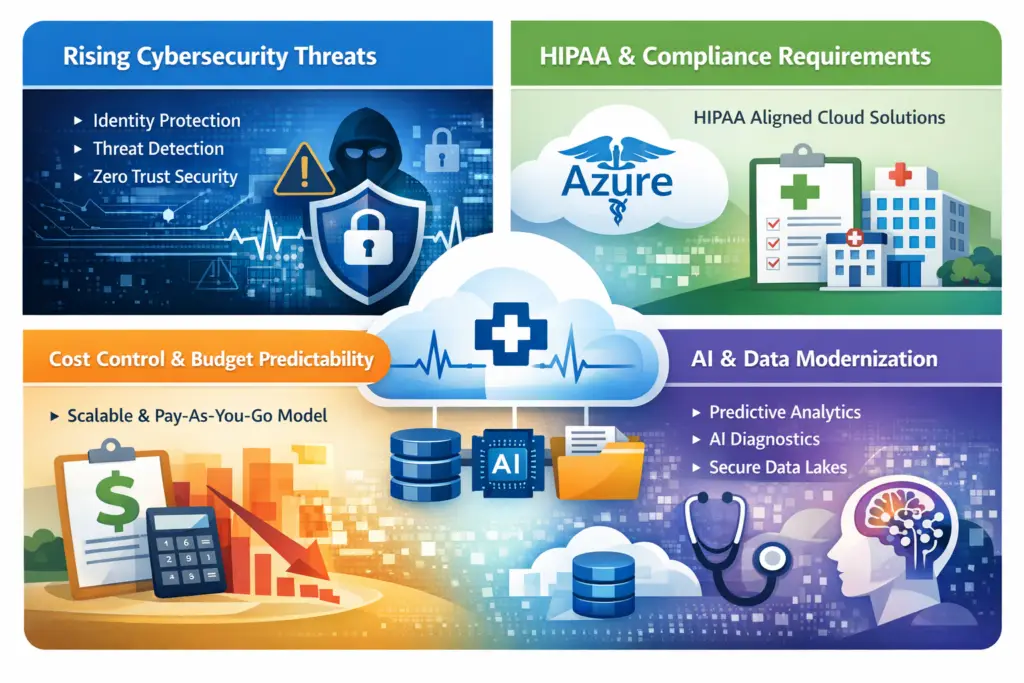
Key drivers pushing healthcare to Azure include:
1️⃣ Rising Cybersecurity Threats
Healthcare remains one of the most targeted industries for ransomware. Azure provides built-in security services including:
- Identity protection
- Threat detection
- Security posture management
- Zero Trust architecture foundations
2️⃣ HIPAA & Compliance Requirements
Azure environments can be architected to align with HIPAA security rule requirements when properly configured.
3️⃣ Cost Control and Budget Predictability
Mid-market providers must avoid cloud sprawl. Azure’s consumption model allows scalable growth without upfront capital investment.
4️⃣ AI & Data Modernization
Healthcare organizations are increasingly exploring:
- Predictive analytics
- AI-driven diagnostics support
- Secure data lakes
- Copilot-style productivity enhancements
Azure provides the infrastructure required to support these initiatives securely.
Core Azure Capabilities Relevant to Healthcare
Infrastructure as a Service (IaaS)
Virtual machines, networking, and storage allow healthcare providers to migrate legacy systems securely without full replatforming.
Platform as a Service (PaaS)
Managed services reduce operational burden and help smaller IT teams focus on clinical and business innovation rather than server maintenance.
Identity & Access Management
Through Azure Active Directory (now Microsoft Entra ID), healthcare organizations implement:
- Multi-Factor Authentication
- Role-based access
- Conditional access policies
- Identity governance
This is critical for protecting PHI and administrative systems.
Azure Security & the Shared Responsibility Model
Security in Azure follows a shared responsibility model.
Azure secures:
- Physical data centers
- Core infrastructure
- Host environment
Healthcare organizations remain responsible for:
- Identity configuration
- Access controls
- Data governance
- Security policies
A key component is Microsoft Defender for Cloud, which provides:
- Continuous security posture management
- Threat detection
- Compliance visibility
- Risk recommendations
When implemented correctly, Azure enables a Zero Trust framework aligned with healthcare regulatory expectations.
Azure for Business Continuity & Disaster Recovery
Downtime in healthcare is not an inconvenience — it is a patient safety risk.
Azure provides:
- Azure Site Recovery for failover
- Azure Backup for ransomware resilience
- Cross-region redundancy
- High availability architectures
For mid-market healthcare organizations, this provides enterprise-grade resilience without enterprise-level infrastructure overhead.
Cost Optimization for Healthcare IT Leaders
Mid-market healthcare CIOs often struggle with:
- Underutilized resources
- Licensing inefficiencies
- Oversized virtual machines
- Lack of cost visibility
Azure provides cost management tools that allow:
- Budget alerts
- Resource tagging
- Usage reporting
- Optimization recommendations
When paired with strong governance, this prevents cloud overspending.
Is Azure the Right Cloud Platform for Healthcare?
Compared to Amazon Web Services and Google Cloud Platform, Azure often provides stronger alignment for organizations already leveraging:
- Microsoft 365
- Windows Server
- Active Directory
- Microsoft security stack
For mid-market healthcare providers deeply embedded in the Microsoft ecosystem, Azure offers integration advantages that reduce complexity.
Final Thoughts
Microsoft Azure | A Cloud Computing Service is not just infrastructure.
For US mid-market healthcare organizations (250–5000 seats), it is:
- A cybersecurity enabler
- A compliance foundation
- A cost-control mechanism
- A platform for AI-driven innovation
However, secure and optimized Azure environments do not happen by default.
They require:
- Proper architecture
- Governance frameworks
- Security hardening
- Continuous monitoring
Without these, organizations risk misconfiguration, overspending, and compliance exposure.
FAQ SECTION
Frequently Asked Questions
What is Microsoft Azure in healthcare?
Microsoft Azure is a cloud computing platform that enables healthcare organizations to securely host applications, manage data, and implement cybersecurity controls aligned with regulatory requirements.
Is Microsoft Azure HIPAA compliant?
Azure provides infrastructure and security capabilities that can support HIPAA compliance when properly configured. Compliance depends on implementation and governance practices.
Why is Azure suitable for mid-market healthcare?
Azure offers enterprise-grade security and scalability without requiring large in-house infrastructure teams, making it ideal for organizations with 250–5000 users.
How does Azure improve cybersecurity in hospitals?
Azure integrates identity protection, threat detection, Zero Trust architecture, and security monitoring tools that help reduce risk exposure.